The Wind Will Blow
(Written 11/2008)
All this way the wind once blew -
Through snow cloaked trees and dusky blue,
O'er heathered fields, past shady glen,
To mountain cave from humid fen,
In sea-storm gale and lover's breath -
But then to die at kiss of death
That stilled the free-flown life of youth
And perished in that mortal truth.
Yet hope there is of breath once more
If one could find that open door
'Twixt death and life, that promised way,
To call forth light to sacred day -
E'en so it stands, the way is clear -
The price was high, the cost so dear.
Now portal'd death that reaches still
Shall hold no more its empty kill.
For time will come when time will cease,
When all held breaths will know release,
And all this way the wind will blow,
And eyes will see, and hearts will know
From Whom this gift and whence it came
Confessing e'er His holy name.
Showing posts with label hope. Show all posts
Showing posts with label hope. Show all posts
Monday, April 10, 2017

Thursday, July 30, 2015
What is Misery?
She said I must be miserable.
I said I'm not a miserable kind of person.
She said maybe not always, but it can't be helped with such difficulties in my life.
I told her misery is a choice I chose not to make.
I think she did not hear me.
Some people think I should not be effected by my difficulties. That being effected means choosing misery.
I disagree.
Misery is having no hope of hope.
Misery is a house of lies because truth is misunderstood and downright ignored.
Misery is being convinced our existence is a shameful audacity and therefore punished for it.
Misery is the terror that lies in unbecoming.
Misery was the home that is no home. The home where misery is.
But misery did not last.
Because God is greater than misery.
He taught me He did not hate me like they did.
He taught me life is not constricted to the falseness that was home.
He taught me to respect myself even if the would not.
He taught me to imagine safety.
He taught me to imagine life and beauty and hope.
He taught me to recognize myself.
He taught me to enjoy and recognize value in my uniqueness.
He taught me to expect good things to come.
My body does not work as most do,
My life is not like the one I first imagined.
Sometimes the weariness brings forth tears of exhaustion and discouragement.
They pass.
I rest.
I still hope because I have been taught to by my Father.
This life of illness is hard, but it is not the hardest thing I have lived.
That life left scars that ache and disturb in stormy circumstances.
That is part of life.
It also complicates my life in ways confusing to many I have met.
But while it is a recurring reminder of horror and misery that was, it is also a reminder that the wounds are healing.
So I do not understand when people assume my life must be misery.
I did not choose that home.
I did choose to turn away, towards the loving, healing, comforting, patient embrace of God.
I chose hope.
Misery is not a failing body, a failing relationship, a failing career.
Dreams and hopes are not limited to mortality.
Misery is blinders that block the brightness of life, of joy, of pain endured and overcome, of growth, of love, of hope.
If you will let Him, God can take those blinders away.
(written 3/8/15)
Thursday, December 11, 2014
Just One Day
Fear thou not; for I
am with thee:
be not dismayed; for I am thy God:
I will strengthen thee; yea, I
will help thee;
yea, I will uphold thee with the right hand of my
righteousness.
Isaiah 41: 10
Hope can seem elusive
When the Evil One draws near
He'd have us focus far ahead
On all that we might fear.
For the future seems uncertain
When looked at from today
Each dream that we might hope for
Could go wrong in every way.
Thus he would entrap our minds
Held fast by fear's intent
That we might re-direct our lives
And, thus, our dreams prevent.
But the Lord gave us the answer
Spoken long ago
That shows how to hold onto
The dreams our hearts still know.
He said, "Take one day at a time
Don't borrow future fears
There's work enough to do right now
Don't waste those precious tears.
"Satan would have you think I can't
Do all I said I would -
I promised I would do the rest
Once you've done all you could.
"So don't worry about tomorrow
We'll get there as we will
There's no need to leap mountains
Just work on this day's hill.
"And as you walk on, day by day,
Though far your dreams appear
Have faith in me, walk by my side,
And soon all will be clear.
"Do not fear the Dark One
I'll show the way that's true
You see, I was here long ago -
I walked it once for you.
"So let the future wait for us
We'll get there as we may
For now there's just one moment
For now there's just one day."
(written 1/3/06)
I still find myself
needing to remember this at times.
In Matthew 6:34 it states ,"Take
therefore no thought for the morrow: for the morrow shall take thought for the
things of itself. Sufficient unto the day is the evil thereof."
Sometimes we get so
caught up in everything we're trying to work out just right, or anticipating
any potential problem to avoid negative attention, or focusing on the magnitude
of the mountain ahead of us that we can get paralyzed with the stress of it all.
This scripture shows that today, now is what we need to concern ourselves with.
It is well to plan and prepare, but don't waste the now on the future. We have
enough things to care about today without adding tomorrow's burdens on top of
it. Even better is the 3 Nephi version where it ends, "sufficient is the
day unto the evil thereof." Now, not only can we stay focused, we also
have the assurances that we'll be able to handle it even if it's just a day at
a time
Tuesday, November 11, 2014
The Holiday Battle
It's that time of year again, when the trappings of Christmas appear ever earlier than the year just past. When the seasonal isle could leave one confused to which holiday comes next - is it Halloween? Or Thanksgiving? No, it's Christmas. When radio stations provide alternative channels for those who want to sneak in as much Christmas as possible. When the rants and despite appear against those who should know better than to mix their holidays.
Mostly, I just ignore the anger and judgment. Why spend my precious energy being upset about how someone else chooses to celebrate a holiday? Why turn my focus away from value and waste it on contentions that can only distract from the good I seek? Why attack traditions others embrace for not being as 'pure' as they should be? Why draw battle lines by stating 'you must stand in line, wait your turn, keep quiet, stop bothering us!'?
How much hubris is it to state that celebrating Christ's birth and all that means for the world can and should only happen in the manner you feel fitting? What? Is this: My way or the highway? Everyone knows that such an attitude only breeds antagonism and enmity. Why does this keep happening?
I actually asked a girl on twitter why she would choose to hate Christmas because other people aren't celebrating the right thing, in other words - celebrating wrong. It was an honest question, but she chose not to see it that way. She got mad that I dared question her and ended by claiming I was accusing her of being Marxist. What does Marxism have to do with this? Frankly, I haven't bothered looking it up to figure it out.
Part of the reason this is so troubling to me is because I am one who tends to be ready for Christmas earlier than most. I do not understand why this should be attacked. I have tried to express this conflict before (see post from last year - You Say, Sir, You Hate Christmas, inspired by the 'I Hate Christmas' song/refrain). Yet it never seems to translate to others. So I will try to explain, again, better, I hope, here.
I think I must have formed a different sort of relationship with the season of Christmas. This only occurred to me last month when discussing it with a friend. He has never had much connection with holidays in general and, as we talked, it appeared that as his family had never engaged much with holidays, he had no real emotional attachment. If anything, it seemed to me that everyone must appear to him as quite carried away by holidays all around.
Once I finally wrapped my head around the different perspective, I saw that my own is not only a reflection of my past, but very likely foreign to the perspectives of others. As I've seen the complaints and condemning, I have pondered how I can better express why I am so ready to embrace Christmas earlier than the average person on the street.
I have not hidden the fact that my years at home were far from ideal. Those issues are addressed in other posts. Simply stated - they were a time of what is known as hyper-vigilance, an uber-awareness that comes from long-term exposure to unfriendly/hostile environments. In many ways, home was a trap I could not escape, and deep in my sub-conscious was a fear that it would always be that way.
Except for Christmas.
It wasn't that home dynamics changed during Christmas. It was that the dynamics of the world change during the Christmas season. Unlike any other time of year, so many people open their hearts to love, to think of others, to give, to help, to spreading kindness and cheer. These are all characteristics of charity - the pure love of Christ. The event that inspires this is celebrating His birth. It is shown in music and lights and food and decorations and programs and even in fictive, festive characters. And this spirit envelopes the world and touches even the hearts of misers. Of course it would resonate so deeply with me.
Christmas has always been the time where I've felt peace and even a safety - like everything would work out. I crave that feeling. And Christmas lights in the tree help me feel it. I don't think of it so much as a tradition. It's like how a candle's glow is comforting, too. Only the lights are colored and they make pretty patterns on the walls as they gently fade in and out. They are a symbol of Christmas which is when things are better. And things are better because of Christ. Christmas is my lifeline to hope. And I cling to it.
Consider the bleakness in the world without Christ - a mortal world bound to Murphy's law, where nations destroy nations and only records are left, until, they, too, fall to dust. Where there is no reason to expect that anything done in life has meaning so why not give in to our baser natures? Why respect any other living being like unto ourselves? Perhaps when the emptiness and despair of such an outlook is comprehended can the depth of my yearning for the joy and light and peace and promise that Christ's birth brings.
Consider that it is a time when everyone gets the chance to be shown they matter. To us. To Him.
The child's delight at the special things possible this one time of year.
The deeper symbolism if paired with the pagan festival celebrating the successful passage once again past the longest night of the year.
Consider that His birth is the greatest promise ever made, fulfilled on Easter, and we get to share that light and truth and joy with others - that we are the 'lower lights' to His great beacon. Like in candles, and Christmas lights set under the star.
So, yes, my tree is up and has been for weeks. With so many dark things happening in the world, I wanted the comfort that the Christmas spirit brings. The spirit of promise and hope and love and peace and cleansing and healing. Even if it angers others, I will turn to those things which help me 'always remember Him' and keep His spirit to be with me. And I will welcome this season as early as I can.
Wednesday, August 27, 2014
Help Will Come
D & C 68: 6Wherefore, be of good cheer, and do not fear, for I the Lord am with you, and will stand by you; and ye shall bear record of me, even Jesus Christ, that I am the Son of the living God, that I was, that I am, and that I am to come.
Help Will Come
2/18/07
No matter how alone
you feel
Or, in truth, you
may well be
Or how you cry out
in your soul
For one to trust continually.
No matter how you
search and look
And still there is
no-one
Have faith, be
still, do not lose hope
For always, help
will come.
The source, each
different, yet the same
The Lord works
through the ones who will
Each help made equal
to each need
Shows us the Lord is
faithful still.
He sends one soul to
listen well
Another to suggest
And when there's
no-one to give hope
By His help we'll be blessed.
So though heart,
faith and hope are tired
And still you have
no-one
Have faith, be
still, do not give up
And hope, for help
will come.
Monday, August 11, 2014
Post-Traumatic Allergies and Landmines
I've been pondering a blog post on Post-Traumatic Stress Disorder for almost a year. I am finally writing it.
When people hear PTSD mentioned, it is usually referencing war experiences, rape, terrorism, natural disasters, and significant violence episodes. Those are the angles talked on and researched and beginning to reach the public consciousness. I don't need to reinvent that wheel here.
What I do want to do here is clear up some misconceptions I have seen and parallel some examples I have recognized in various stories.
First off, some metaphors of how I could possibly have PTSD if I don't fall into the above scenarios.
Consider the phrase, "The straw the broke the camel's back."
There were times when I'd be upset, hurt, distressed over the latest incident, I'd often be rebuffed with, 'What's your problem? My family does stuff like that. It doesn't mean anything.' The event certainly didn't merit my over-reaction, from their point-of-view. It was a simple, measly straw. Nothing to get excited about. Unless you were the camel and the straws were only ever piled on and never relieved by also 'normal' things like love and appreciation and gratitude and help. When you are carrying thousands of straws, every straw adds to the barely bearable weight.
"Chinese" water-torture is also an apt parallel. A single drop of water falling on the forehead of a restrained individual doesn't sound like much, but the repetition, the inevitability, the sensitivity of the location landed, the inability to escape it are all elements of control, manipulation, and breaking a person down.
I didn't have to be beaten or raped. In fact, such actions would have propelled me to denounce the abuser because I would have known his actions were wrong. But mental abuse, emotional abuse, they leave no visible evidence. Only one experienced with the scars would recognize the cognitive/behavioral evidence in the non-psychotic victims. Could one have seen my spirit/soul, however, the image might just make one realize just how devastating such life-long abuse really is.
It is an automatic allergic reaction. Allergies are due to 'inappropriate' responses by the body to substances the body should be able to tolerate without adverse reaction. There are allergies of various levels and various causes - sometimes superficial responses, sometimes life (psyche) threatening anaphylactic responses.
It can come from the environment (situations, sounds, sights). It can come from ingested foods (philosophies and ideologies). It can come from safe locations (accidental triggers) or from malicious sources (people who refuse to accept your reality and seek to force/prove otherwise). It can come from sources that previously had never been a problem. Maybe it starts as hay-fever where sneezes short out your attention in a rush or it gets harder to see clearly because sight is obscured or perhaps it is a rash that won't stop itching and makes you jumpy. Or perhaps you are placed in the environment/situation that directly provides the dangerous trigger and it's all you can do to get to safety where you can breathe again.
There are certain things that can help allergies. Ways to try to deprogram the traps and neutralize the mines. Some think it's an easy, perfect remedy. Whether out of good-will or simple impatience, they have trouble comprehending that what took a life-time and specific circumstances to create requires the same to un-create.
Some people imagine that, so long as the events are no longer occurring, there is no cause for current problems because of past events. Just 'move on, already'. Wow. Such thinking betrays a solid lack of understanding of the concept of actions and consequences. It's like condemning a person with an old, 'healed' injury - war wound or sports injury - because the changing pressure systems of incoming weather makes the injury hurt again. It's like saying that because wars are in the past, that any landmines left over should automatically deactivate through wishful thinking.
I knew a guy who showed me a trick he liked to pull on family members and thought to rig the church computers in the same manner. It seems there is some location where basic computer commands can be re-written to effect entirely different results. Some use this to make convenient short-cuts. He used it to tell the computer that whenever someone tried to use the internet, the whole computer would shut down. Having spent many years in written-paper heavy college courses, my dismay was automatic, and apparently unexpected to him. I've lost papers because the computer froze on me when I'd forgotten to save. The thought of doing a quick fact-check online while working on a paper and having that mean I lost all that work because some punk kid thought it would be a funny prank was not funny at all. When I presented that little scenario, he quickly restored the original settings.
PTSD is similar. It is landmines and control traps. It is a form of brain-washing. Pavlov training the dog to stimulus. It is an allergic response. And when the PTSD is from years of repeated and varied abuse, you can't just deprogram for a single function.
I've seen that people often consider the dementors in Harry Potter and the Prisoner of Azkaban to be reflections of depression because they suck the happiness out of people. With my background, I see them as reflections of PTSD because they trap people by making them live their nightmares. The worse the nightmare, the stronger their hold. Harry's worst memories were far more concentrated than the average teen that fears social rejection due to acne. Therefore the dementors affect on him was far stronger than those with more docile lives. I found it appropriately telling that while Harry didn't have a 'happy memory' strong enough to combat them, he found the strength in the hope of what could be ahead of him.
The Avengers has a few spots relative to PTSD. When Tony Stark is talking to Bruce Banner about when he first hulked out, he states his belief that the anger and the hulk protected him from death - that the hulk was something positive rather than a monster. Banner could only see it as the monster that takes over, the one preventing him and others from living safe, normal lives. He tries to control the anger (supposedly by keeping it at a steady steam) to control the 'other guy'. Yet, to my view, the hulk doesn't appear because he 'gets angrier' but because Banner's life is in danger. To me, it looks like a defense mechanism. Sure, the hulk gets angry, but anger is a motivating emotion - it allows one to take actions that they might not otherwise take. In this case - fighting for his life. Once Banner sees that, he is able to accept that it happens and learn how to live with it and even use it to help others.
The other Avengers dual-parallel comes in the form of Hawkeye and Romanov. She had been raised in the spy-world (extrapolated from movie dialogue as I've never been comic-book inclined) and taught from child-hood to live for herself and her missions. Morality had nothing to do with it. At least not until Hawkeye gave her a chance, against orders, to try to fix her moral compass. She saw that event as her one chance at redemption and felt a debt beyond imagining to the man who let her future have a different story.
Then Loki comes along spouting the ideal that people shouldn't have minds or wills of their own. It just makes things messy and them unhappy. And he just so happens to have a means to enable such brain-washing, mind-wiping. Hawkeye targeted, all of his previous functions are over-written by Loki's demands and desires. Until Romanov manages to return the favor with 'cognitive re-calibration'. But when Hawkeye is finally coming out of it, he tells her she can't understand where his head is - 'Do you have any idea,' he asks, 'what it's like to have your mind ripped out and replaced with something else?' Her response is simple and the best one that can be given, 'You know I do.'
The truth is, most haven't experienced the terror of someone who has so much control over you that you can't even remember events, motives, thoughts contrary to that someone's dictates. "So it is written, so it is done" being able to over-write who you are, why you are, and what you can and 'should' be.
I have met two people that I can think of who have any experience with this. The first was like a breath of air to my suffocating self. Like me, she had distanced herself from the abuser. She was making the best she could out of what had happened and engaging her future with determination, but she also had a deeper wisdom and understanding of the darknesses hiding within people due to her experiences. I'll tell you what, though - she was an amazing teacher, with an energy and enthusiasm that drew everyone's attention and made everyone feel pulled into a grand embrace of charity and affection.
The other made a cursory effort to 'deal' with what happened but preferred denial to recognizing the parts that led to her abusive relationship. While she might be able to relate and support a fellow rape-victim, she has yet to recognize the patterns inherent among all abuse victims and is self-absorbed enough to not notice such behaviors in the first place. Someday, perhaps she will recognize what we have in common. Someday, perhaps she will stop condemning me for refusing to deny the landmines I try to dance the clueless around for continued friendly relations.
When people hear PTSD mentioned, it is usually referencing war experiences, rape, terrorism, natural disasters, and significant violence episodes. Those are the angles talked on and researched and beginning to reach the public consciousness. I don't need to reinvent that wheel here.
What I do want to do here is clear up some misconceptions I have seen and parallel some examples I have recognized in various stories.
*
First off, some metaphors of how I could possibly have PTSD if I don't fall into the above scenarios.
Consider the phrase, "The straw the broke the camel's back."
There were times when I'd be upset, hurt, distressed over the latest incident, I'd often be rebuffed with, 'What's your problem? My family does stuff like that. It doesn't mean anything.' The event certainly didn't merit my over-reaction, from their point-of-view. It was a simple, measly straw. Nothing to get excited about. Unless you were the camel and the straws were only ever piled on and never relieved by also 'normal' things like love and appreciation and gratitude and help. When you are carrying thousands of straws, every straw adds to the barely bearable weight.
"Chinese" water-torture is also an apt parallel. A single drop of water falling on the forehead of a restrained individual doesn't sound like much, but the repetition, the inevitability, the sensitivity of the location landed, the inability to escape it are all elements of control, manipulation, and breaking a person down.
I didn't have to be beaten or raped. In fact, such actions would have propelled me to denounce the abuser because I would have known his actions were wrong. But mental abuse, emotional abuse, they leave no visible evidence. Only one experienced with the scars would recognize the cognitive/behavioral evidence in the non-psychotic victims. Could one have seen my spirit/soul, however, the image might just make one realize just how devastating such life-long abuse really is.
*
It is an automatic allergic reaction. Allergies are due to 'inappropriate' responses by the body to substances the body should be able to tolerate without adverse reaction. There are allergies of various levels and various causes - sometimes superficial responses, sometimes life (psyche) threatening anaphylactic responses.
It can come from the environment (situations, sounds, sights). It can come from ingested foods (philosophies and ideologies). It can come from safe locations (accidental triggers) or from malicious sources (people who refuse to accept your reality and seek to force/prove otherwise). It can come from sources that previously had never been a problem. Maybe it starts as hay-fever where sneezes short out your attention in a rush or it gets harder to see clearly because sight is obscured or perhaps it is a rash that won't stop itching and makes you jumpy. Or perhaps you are placed in the environment/situation that directly provides the dangerous trigger and it's all you can do to get to safety where you can breathe again.
There are certain things that can help allergies. Ways to try to deprogram the traps and neutralize the mines. Some think it's an easy, perfect remedy. Whether out of good-will or simple impatience, they have trouble comprehending that what took a life-time and specific circumstances to create requires the same to un-create.
Some people imagine that, so long as the events are no longer occurring, there is no cause for current problems because of past events. Just 'move on, already'. Wow. Such thinking betrays a solid lack of understanding of the concept of actions and consequences. It's like condemning a person with an old, 'healed' injury - war wound or sports injury - because the changing pressure systems of incoming weather makes the injury hurt again. It's like saying that because wars are in the past, that any landmines left over should automatically deactivate through wishful thinking.
I knew a guy who showed me a trick he liked to pull on family members and thought to rig the church computers in the same manner. It seems there is some location where basic computer commands can be re-written to effect entirely different results. Some use this to make convenient short-cuts. He used it to tell the computer that whenever someone tried to use the internet, the whole computer would shut down. Having spent many years in written-paper heavy college courses, my dismay was automatic, and apparently unexpected to him. I've lost papers because the computer froze on me when I'd forgotten to save. The thought of doing a quick fact-check online while working on a paper and having that mean I lost all that work because some punk kid thought it would be a funny prank was not funny at all. When I presented that little scenario, he quickly restored the original settings.
PTSD is similar. It is landmines and control traps. It is a form of brain-washing. Pavlov training the dog to stimulus. It is an allergic response. And when the PTSD is from years of repeated and varied abuse, you can't just deprogram for a single function.
*
I've seen that people often consider the dementors in Harry Potter and the Prisoner of Azkaban to be reflections of depression because they suck the happiness out of people. With my background, I see them as reflections of PTSD because they trap people by making them live their nightmares. The worse the nightmare, the stronger their hold. Harry's worst memories were far more concentrated than the average teen that fears social rejection due to acne. Therefore the dementors affect on him was far stronger than those with more docile lives. I found it appropriately telling that while Harry didn't have a 'happy memory' strong enough to combat them, he found the strength in the hope of what could be ahead of him.
The Avengers has a few spots relative to PTSD. When Tony Stark is talking to Bruce Banner about when he first hulked out, he states his belief that the anger and the hulk protected him from death - that the hulk was something positive rather than a monster. Banner could only see it as the monster that takes over, the one preventing him and others from living safe, normal lives. He tries to control the anger (supposedly by keeping it at a steady steam) to control the 'other guy'. Yet, to my view, the hulk doesn't appear because he 'gets angrier' but because Banner's life is in danger. To me, it looks like a defense mechanism. Sure, the hulk gets angry, but anger is a motivating emotion - it allows one to take actions that they might not otherwise take. In this case - fighting for his life. Once Banner sees that, he is able to accept that it happens and learn how to live with it and even use it to help others.
The other Avengers dual-parallel comes in the form of Hawkeye and Romanov. She had been raised in the spy-world (extrapolated from movie dialogue as I've never been comic-book inclined) and taught from child-hood to live for herself and her missions. Morality had nothing to do with it. At least not until Hawkeye gave her a chance, against orders, to try to fix her moral compass. She saw that event as her one chance at redemption and felt a debt beyond imagining to the man who let her future have a different story.
Then Loki comes along spouting the ideal that people shouldn't have minds or wills of their own. It just makes things messy and them unhappy. And he just so happens to have a means to enable such brain-washing, mind-wiping. Hawkeye targeted, all of his previous functions are over-written by Loki's demands and desires. Until Romanov manages to return the favor with 'cognitive re-calibration'. But when Hawkeye is finally coming out of it, he tells her she can't understand where his head is - 'Do you have any idea,' he asks, 'what it's like to have your mind ripped out and replaced with something else?' Her response is simple and the best one that can be given, 'You know I do.'
*
The truth is, most haven't experienced the terror of someone who has so much control over you that you can't even remember events, motives, thoughts contrary to that someone's dictates. "So it is written, so it is done" being able to over-write who you are, why you are, and what you can and 'should' be.
I have met two people that I can think of who have any experience with this. The first was like a breath of air to my suffocating self. Like me, she had distanced herself from the abuser. She was making the best she could out of what had happened and engaging her future with determination, but she also had a deeper wisdom and understanding of the darknesses hiding within people due to her experiences. I'll tell you what, though - she was an amazing teacher, with an energy and enthusiasm that drew everyone's attention and made everyone feel pulled into a grand embrace of charity and affection.
The other made a cursory effort to 'deal' with what happened but preferred denial to recognizing the parts that led to her abusive relationship. While she might be able to relate and support a fellow rape-victim, she has yet to recognize the patterns inherent among all abuse victims and is self-absorbed enough to not notice such behaviors in the first place. Someday, perhaps she will recognize what we have in common. Someday, perhaps she will stop condemning me for refusing to deny the landmines I try to dance the clueless around for continued friendly relations.
Wednesday, July 16, 2014
The Madness of Denethor
"The Madness of Denethor" has been a phrase that has come to mind numerous times over the past six months or more. It is not a happy observation.
In The Lord of the Rings, Denethor is steward, or acting leader, of the land of Gondor. Should the heir ever come to claim the throne, Denethor would then step aside as his stewardship would then be complete. At least he would if he did not resent the heir for making claim on authority Denethor did not wish to give up. If that was all there was to it, the story would simply be one of political rivalries.
But it is not.
Aragorn, the heir, was raised in obscurity because his lineage was hunted by the real antagonist. This antagonist, Sauron, was so beyond the powers and skill of the world's inhabitants that even the strongest man (wizard) had switched sides as Sauron's victory was considered 'inevitable'. Few stood up the wicked forces and some of those were of the weakest of beings. How could anyone expect anything other than being overrun by evil?
That is exactly how Denethor saw things. 'His' kingdom being taken away, his favored son dead, his despised son dismissed to death, and a force incomprehensible outside the city walls.
What was there for him to do? He chose death for himself and for all around him for he had decided that life was no more worth living.
Many are choosing the same things. It is no longer a horror story every few years. No longer once a year. Now it is multiple times a week.
It did not have to be.
And so many are following the same pattern. So many are succumbing to the madness of Denethor and taking others with them. But, as in The Lord of the Rings, we too must wait and place our hope in the return of the King, for He will come. It's gonna get ugly. In so many ways it already is. The world is polarizing and the differences expanding. But the scriptures (of many denominations and religions, mind you) promise that this end, of sorts, is also a beginning of a far better story.
In The Lord of the Rings, Denethor is steward, or acting leader, of the land of Gondor. Should the heir ever come to claim the throne, Denethor would then step aside as his stewardship would then be complete. At least he would if he did not resent the heir for making claim on authority Denethor did not wish to give up. If that was all there was to it, the story would simply be one of political rivalries.
But it is not.
Aragorn, the heir, was raised in obscurity because his lineage was hunted by the real antagonist. This antagonist, Sauron, was so beyond the powers and skill of the world's inhabitants that even the strongest man (wizard) had switched sides as Sauron's victory was considered 'inevitable'. Few stood up the wicked forces and some of those were of the weakest of beings. How could anyone expect anything other than being overrun by evil?
That is exactly how Denethor saw things. 'His' kingdom being taken away, his favored son dead, his despised son dismissed to death, and a force incomprehensible outside the city walls.
What was there for him to do? He chose death for himself and for all around him for he had decided that life was no more worth living.
Many are choosing the same things. It is no longer a horror story every few years. No longer once a year. Now it is multiple times a week.
D&C 45:26 And in that day shall be heard of wars and rumors of wars, and the whole earth shall be in commotion, and men's hearts shall fail them, and they shall say that Christ delayeth his coming until the end of the earth.The saddest part is that it did not need to be. He hated life because it was not what he decided it must be. But it was a decision. He chose to deny the truth of his position. His unwillingness to accept his part made the loss of the part not his own that much harder. It was his demands for power that led his favored son to be so desperate and therefore vulnerable. It was his own bitterness and hatred of difference that led him to misvalue his remaining son until he was left with 'nothing' and no one. It was his refusal to admit to hope, even from the source that denied him the glory he demanded that meant he could not imagine hope.
It did not have to be.
And so many are following the same pattern. So many are succumbing to the madness of Denethor and taking others with them. But, as in The Lord of the Rings, we too must wait and place our hope in the return of the King, for He will come. It's gonna get ugly. In so many ways it already is. The world is polarizing and the differences expanding. But the scriptures (of many denominations and religions, mind you) promise that this end, of sorts, is also a beginning of a far better story.
Saturday, October 12, 2013
De-stressing and Refreshing the Hope Banks
Between health difficulties and the stress of trying to imagine how to actually manage the upcoming move when I'm doing good to concentrate enough to make a to-do list, let alone remember to work on it, I've been battling discouragement off and on over the past month. General Conference last weekend did much to lift my spirits, but facing a doctor that has apparently never thought to look for more information about my particular health problems kind of put another damper on them. Since my health problems are rather sensitive to stress, when it builds up to these levels, I have to focus on getting them to drop quickly or I'll be facing worse 'crashes' as time goes on. (It has to do with the system that manages autonomic functioning in the body, including the adrenal glands - the more stress, the more likely it'll trigger another function to falter.) It is, therefore, not surprising that upon waking this morning, my attention has been on how to refocus and refresh the 'hope' banks.
While I may not be able to do all that I used to do before the H1N1 vaccine skewed my body's regulator, even accomplishing a few small things is enough to help dispel the hated 'trapped/stuck' feeling. Remembering that my life is my own and I can act and make choices and have a say in where and how it goes is crucial to a sense of well-being. The hardest times of the past were when there was no sense of freedom, no autonomy from the demands of others and no sustaining connections to other humans who actually cared and wanted to be involved in my life because of me rather than because of how it would reflect upon themselves. Being able to say, 'No, I don't like that; I don't want that,' or, 'Yes! I am doing this even if it seems weird to someone else,' allows a person to retain and remember their identity and individuality. It is quite good for the health. Knowing people who sincerely care and love you and who are willing to talk even if it's just for random talking has also proven very helpful in lifting my spirits.
If you've paid any attention to my previous blog-posts, you know that stories are my passion! If I've had a PTSD trigger (yes, I'm admitting it here as one of my trials in life - read the Moriarty post and you'll have a good insight on how some of that came about...) talking about the story(ies) I am or just have consumed is the quickest distraction to help me out of the bad place. Right now, I'm debating between a Danny Kaye movie (laughter is the best medicine, after all) and watching The Avengers again. (It's been a month or so since last time...)
Meditation may or may not prove helpful for me. If the stress is too high, I'll just get caught in a down-spiral. Boyd K. Packer said that sometimes we need to pray and then get up and go about our lives - that extended time 'on our knees', as it were, won't always grant us the answers we are asking for. Rather, pray in faith and go forth with faith and the answer will come in God's own time and God's own way. So long as we are willing to accept the answer that comes, we will recognize that He does answer. This ties in with a pattern I noticed in the scriptures some years back.
Throughout the Book of Mormon and Doctrine and Covenants, I kept noticing reference to 'prayers of faith'. Truly, praying, asking for help from anyone, really, requires a confidence that help is even available. But then I also began noticing the phrase 'faith in their prayers'. It shows up most distinctly in D&C 10: 47-52 where the Lord speaks of the prayers of those who wrote the Book of Mormon and their confidence that their efforts would have value for the future generations. There was nothing to indicate the records would even survive after they died, yet they acted in faith, kept the records, and prayed in faith, believing their prayers meant something to God. In D&C 10, He shows us that even that secondary faith has value.
I suppose that could translate into my efforts to finish my education after I got sick. Granted, I've been of the idea that the doctors will someday get a clue and I'll be able to function at least as well as I did before getting sick (there are plenty of clues I've had the dysautonomia since being a child but that my body was able to mostly compensate in functioning). As time has passed, however, one could wonder why it was so important for me to fight the sickness and finish my last semester at the university if I'm often left in such a low level of functioning that it doesn't appear to hold much economic value. Is not paying and striving for an education an 'act of faith'? Now, I'm the stubborn type who is trying to find ways to move on even when it's so *growling* difficult to move, so I look at the education as a victory in itself. But you see how the apparent lack of point, value, effect of the endeavor could be a frustration? I readily admit that another recent topic on my mind is sorting itself out in these terms as I type. (I don't actually share everything in my blog - deal with it. ;) )
Getting a fresh perspective, or as we Mormons like to say, 'an eternal perspective', on things often helps whatever feelings of lack or failure or disappointment fade to the background. Often, things take far longer to completely resolve, but when they aren't overwhelming out attention, we are far better able to handle life as it comes. Since I spent so many years feeling trapped, it is logical that I respond the quickest to the things that helped me escape those situations - action and stories. I am a person of faith and it has served me just as well, so I must remember to bring my perspective into balance with the eternal perspective by using the patterns taught by the scriptures and by church leaders. Another might find their relief in running. Or painting. Or yoga. Or cooking. Or working on a car. Or journaling. The point is simply that if we pay attention to our personal patterns of stress and relief, we can actively pursue restored balance. And I much prefer living with a hopeful outlook on life. :)
Friday, September 20, 2013
So the World's Falling Apart... Isn't Life Great?!
 |
| Alex Boye |
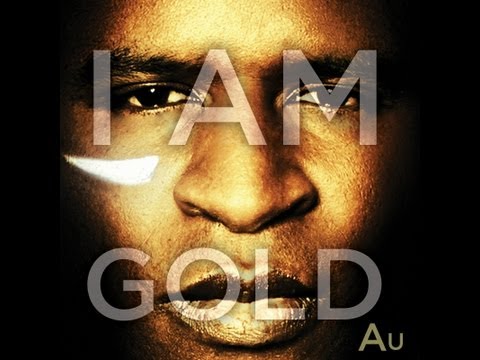
I actually was thinking about this post last night and debated writing it first, but then I realized the last post was actually a good set-up for this one, so they are coming to you out of the order in which they came to me. Like tonight, last night was one that had me up past one, but last night I was listening to the song above on repeat rather than writing. It has been some time since I last had a song which made my hopes for the future soar like no other. When I was trapped at home, it was the song "Bound for the Promised Land" as sung by the MoTab (Mormon Tabernacle Choir is somewhat unwieldy...) and after leaving home but still a bit disconnected to the idea of having any real role in this world it was "Could It Be Me?" by Charlie Daniels. (Yes, it's a shocker - I actually have a country music CD!) The progression has apparently stepped on to Alex Boye's new "I Am Gold". (Read the article in the link - background on what it means and why I've tried to insert the music video for your listening while you read.)
As I closed my last post, my weather app on my phone includes news headlines and I've mostly stopped reading them because they're all about people doing horrible things that only seem possible if they've lost all feeling for the humanity we all share. From what I've seen on the other Christian accounts on twitter as well as conversations with people, Christians in general (not just Mormons) see this time as the final period before Christ comes when the world begins trying to tear itself apart. In earnest. (Sorry, Oscar Wilde, in this case, being earnest is the last thing we want to be important...) 'Perilous times shall be' and 'men's hearts shall fail them' because of fear. Something of a gloomy prospect, no? Natural disasters abound, wars threaten in every direction, corruption is old news, and people who should be friends turn on each other for foolish reasons. I'd say turn off the TV, but I still don't have an antenna, so I can't actually watch it. (Agents of S.H.I.E.L.D. starts next week, though, so I'm working on it!)
This month, Salt Lake City, Utah had its first ever ComicCon, breaking the standing record with 50,000 tickets sold for a first time event. I didn't go, but I did read a few articles about it as well as the comments (I like to do that, remember?). A couple of pertinent themes were: one - the idea that anyone interested in the hero genre is a geek; and two - that America has been growing ever more attuned to the hero genre (witness the predominant box-office theme of late).
If finding value in the stories that give hope makes one a geek, then apparently I am a geek. News to me... That modern America would respond to stories of cataclysm confronted, survived, and overcome is no surprise, however. It is the idea of optimism and the willingness to face what comes to the best of our abilities that lets so many find the hope, the good even when the world is so dark. It is the Christian's knowing that Christ will come and restore peace and balance and sanity to the world that lets us look beyond to better days. And in seeing the Gold at the end of the effort, we find the evidence of the good things to come even as everyone else thinks we've lost our marbles. :)
Hebrews 11:1
1 Now faith is the substance of things hoped for, the evidence of things not seen.
Smeagol vs Gollum; Merlin vs Morgana
You know those projects that you just stare at because the thought of starting them is so overwhelming? Well, I had this thought that if I put in the next Lord of the Rings movie (Two Towers - my favorite!), I might find it an easier prospect. [Transferring the mosaic laid out on cardboard to a board with the cement glue... It's my first one, so I'm nervous I'll mess it up with how small I made the pieces... Memo for next time - use bigger pieces...] I started the first disc and ate my dinner after realizing I'd get too confused if I tried to expand the size/gaps in between the pieces and found myself pondering a completely different topic and ignoring the mosaic. The more I thought about it, the more I realized that it's another one of those multiple sources and thoughts converging into one. I took notes of my thoughts in my phone, didn't bother to watch the second disc yet (I wouldn't want to be distracted during the humor of Legolas and Gimli, after all!) and came to the computer where family history distracted me again. But here I am now, phone at the ready and a web of ideas to lay out for you.
The thoughts started as a combining of random sources bringing to mind the role of agency - how our choices determine our destinies inasmuch as the paths we take determine our ultimate destinations. The more wisdom and care we apply when making our choices will do much to indicate where we end up. With that in the background, I found myself considering Gollum in a different way. I'd always been a bit disturbed (still am, truth be told) by Sam's blatant antagonism of Gollum and how dear, sweet, wise Sam couldn't see that Frodo's anxiousness that Gollum could be redeemed was really his own concern that he would/was falling to the evil ring's power. This pity is even more brought forward as we watch the split-personality of Smeagol begin to fight off the wicked drivings of Gollum. But then I recalled something that I don't think is well known. Most are aware, I believe, that split-personalities tends to indicate past trauma in the individual's life, but being an uncommon situation, I think many don't realize that the person consciously seeks the splitting as a way to cope. It's a choice. (At least for the initial split. I haven't thought to ask beyond that...)
As Gollum taunts Smeagol about how he will be betrayed, that 'they'll cheat you, hurt you, lie to you' finally ending with 'nobody likes you', I found myself wondering what caused the split. What was the trauma that Smeagol couldn't handle on his own? The third movie makes it clear that he was ostracized because his greed caused him to murder his friend, so to say he'd been horribly wronged doesn't really fit. But then I remembered Loki and Thor and The Avengers. Loki hadn't been wronged and yet, in his mind, his actions were perfectly justified because of how he chose to interpret events. It is also how my family chose to see me as the source of all problems even as I was in relative form a house-elf. So, returning to the 'cheating, hurting, lying', this seems the basis for Gollum's hatred and anger self-justification. Ownership of the ring and citizenship in the Shire were both his right in his mind, so to be banished from the latter because he killed for the former would twist into being cheated. Also, he'd see Bilbo's winning of the ring as a cheat. Smeagol then had a hard life in the course of the consequences of his banishment with the most recent torture at the hands of Sauron's minions seeking the ring. Hence the 'hurt you'. Finally, the one who chooses to turn to anger and hate has no patience of compassion for the frailties of others or circumstances which interfere with stated intentions. He has no inclinations to forgive any perceived slight to himself and so it all becomes 'lies'.
In the stories I know of split personalities, there is usually a weak, protected, identity, and a strong protector identity. This translates to Smeagol as the weak one and Gollum as the protector. The thing is, Gollum as protector is like an abuser/victim relationship where the weak one can't imagine life being possible without what little support, abusive though it may be, the abuser provides. And since Smeagol is by no means an innocent, this gives the Gollum identity more to use in posing for strength over Smeagol. I suppose one could go into a discussion of id, ego, super-ego and say that Smeagol was lacking in the super-ego conscience factor, but I only know a couple split-stories and neither of them follow that pattern. What it does suggest to me, however, is the nature of the bully-coward, happy to hide behind the stronger entity as an easy excuse for their actions. That like the war-criminals seeking to claim that they were only following orders.
The good news is that in Smeagol's turning to Frodo (pre-Faramir), it proves that there is hope for the good to be found even in a long-mired soul. Smeagol had many opportunities to kill Frodo but saved his life more than once. I tried to consider that it could just be he didn't think he could get away with anything with Sam there (as Sam, himself, would see it) but that fails to take into account how Smeagol also showed joy and gave the gift of food and acted on trust when Frodo called to him. The good was there if he would choose to act on it even if things got rough. Sadly, he didn't. The bully has a weak spirit and when circumstances made him hurt, Gollum was quick to return and call it a lie. Rather than accept that more was going on, even when he later had the proof of it, he chose to remain Gollum and full of hate and malice.
It has always troubled me when I come across a character who has been wounded by life and chooses to turn dark for it. I remember a multi-page journal entry after watching The Phantom of the Opera the first time being so upset that a boy abused and set free was not then nurtured into healthy patterns, but left alone to develop in as twisted a manner as his outward form. Quasimodo is proof that the story could have been different. But then, it simply proves the point of Gollum and Smeagol. We choose our attitudes, our responses, our motivations, our destinations. White Collar's Neal Caffrey doesn't need coddled to turn his life as a con-man around, he just needs the Frodo opportunity. Nor does he need to be condemned forever as would the Samwise response. He just needs the chance and to make the choice.
I mentioned in a previous post that I have been watching BBC's Merlin. Morgana (read Morgan leFay) is Merlin's nemesis and the story has to hold to that, but in this version, she starts out as friend and good person. But then she learns she has magic (an automatic death-warrant if King Uther finds out) and in her fear, she turns to hate. She becomes Gollum. At one point Merlin, himself magical, points out to his one confidant that he actually has someone to guide and help him where she, the king's ward, sees herself as having no one. And yet Merlin is the Quasimodo to prove her twisting hatred wrong. While he can't tell her his secret, he does tell her that she can choose to use her powers for good, even being in such danger. But she has no desire to listen for she has chosen how she will see things. She has chosen to look to pride and seek vengeance against a reality she doesn't like rather than considering how to work within a flawed reality for the good of all. And, ultimately, she falls because of it.
Merlin, who is good of heart and in just as much danger as Prince Arthur's servant, is constantly using his forbidden gifts to follow his conscience while repeatedly saving those who would kill him with the very powers for which they would kill him. Many project their own natures on him, accusing him of intending to use his powers/position to gain power and influence for himself, but he is not ruled by pride. He is willing to accept that sometimes things go wrong and sometimes that means the innocent suffers. Rather than lashing out in hatred, he seeks to find the best way through for all involved.
The news is full of such stories that I'm frequently reminding of 2 Timothy 3 (perilous times shall be - good old seminary scripture mastery rhymes!) and D&C 88:91.
91 And all things shall be in commotion; and surely, men’s hearts shall fail them; for fear shall come upon all people.The news feed on my weather app is full of stories of people choosing to be Gollums and Morganas. But that is not the only choice. It's not often the easiest road, but there is such much more dignity in being the Merlin. And the most dignified part about Merlin is how his choices enable dignity for others as well. Let us all be Merlin.
Saturday, September 7, 2013
Pray for Peace, People Everywhere!
So today is a day of prayer and even fasting (by those who are medically able) as called by the new Pope Francis. I'll readily admit my understanding of Catholicism is limited. (The most my mom told me about her time in Catholic school was that they served cinnamon and sugar on the rice at lunch time - a tradition that she carried through for us...) I know small bits from some history classes and historical fictions I have read and my strongest visual images of the Vatican come from The Scarlet and The Black and Angels and Demons. (So disappointed in the end! Especially after the build-up right before!)
That really is beside the point, however, when it comes to uniting hearts in prayer around the world in a call for peace. While most religious people feel their religion has the ultimate truth, one of the best lessons I had in 10th grade World Civ was that if God is God of all and a loving God of all, then whether the child is of the 'right' religion or not, can we really think He'd only hear the sincere prayers of said 'right' religion? (Yes, it was at school, but I'm not telling you the teacher's name so you can't sue him - it was a good lesson worth teaching.)
I have always been that person who gets excited for Christmas by the time summer has hit its swing. You know the one - you all groan as soon as you hear someone's already listening to Christmas music and state quite strongly that it shouldn't be brought out until AFTER Thanksgiving, and preferably not even until December 1st. I learned at a young age that I cannot safely speak for others in a large range of topics as I tend to come from the flip side of the coin, so I won't try to here. I will say that the reason I have such a strong love for Christmas was that where my home was one of anxiety and fear and stress, the Christmas season was the constant counter to those feelings. When the world in general opens their hearts to goodness, kindness, charity, love, and peace, God is able to pour out His spirit in greater abundance and it is felt in the true Christmas spirit. Since it came from the outside, it was strong enough to counter, for those couple of months, the harder things of home.
I've long wished for those feelings of peace and hope and love and light to be there all year round and have even been confused at why that doesn't happen. I came to realize that people tend to be more preoccupied with their own lives during the rest of the year which is why it tends to only show up on the big occasions when people are united. There is great power in unity and that unity should be able to transcend the separating boundaries of different denominations.
I'm remembering the months after 9/11 when we were all still in so much shock and wondering if it would mean war, if it should mean war. I remember waiting to see what the position of the church would be and the sense of peace when President Hinckley said that while we do not recommend war, we will accept the country's call to fight if it decides to as our due diligence to the nation which is our home. Looking back, I think most of us have a sense that it might well have been better if some of the courses taken had been left alone, and I think this is why so many are uncomfortable with the thought of going into Syria with guns blazing. At the same time, there is also something of a WWII/Holocaust echo and the wondering of when it is right to step in to protect those who are being hurt. It is a sticky situation and I do not know the answer.
But I can pray for peace. I can pray that God's/Allah's/Jehovah/s spirit is with all involved insofar as they will allow it to be so that peace can be restored to that battered land. I can pray that there will be enough donations from around the world to help those who have lost everything in the conflict. I can pray that we will be more aware of our neighbors and better able to give assistance even before it comes to crisis. (This civil war has been going on for over a year-and-a-half, yet when I first mentioned it to a friend in spring of last year, she had no awareness of it.) I can pray that we can find strength and stability in our own lives and spheres such that we will be in a position to offer needed assistance. And I can pray that we will let the commercialism and politics of life be a simple side-note to the things that really matter, no matter what the time of year: Charity, patience, peace, kindness, hope, faith, healing, tolerance from all parties, unity.
Finally, I conclude with a paragraph about the writers of the Christmas song, "Do You Hear What I Hear?", from wikipedia (I tried to go to the original source, but the LATimes wanted me to pay for an account to view the archives...)
Regney was inspired to write the lyrics "Said the night wind to the little lamb, 'Do you see what I see?' " and "Pray for peace, people everywhere," after watching babies being pushed in strollers on the sidewalks of New York City.[1] Shayne stated in an interview years later that neither could personally perform the entire song at the time they wrote it because of the emotions surrounding the Cuban Missile Crisis.[1] "Our little song broke us up. You must realize there was a threat of nuclear war at the time."[1]And the lyrics to the song:
Said the night wind to the little lamb,
Do you see what I see?
Way up in the sky, little lamb,
Do you see what I see?
A star, a star, dancing in the night
With a tail as big as a kite,
With a tail as big as a kite.
Said the little lamb to the shepherd boy,
Do you hear what I hear?
Ringing through the night, shepherd boy,
Do you hear what I hear?
A song, a song, high above the trees
With a voice as big as the sea,
With a voice as big as the sea.
Said the shepherd boy to the mighty king
Do you know what I know?
In your palace warm, mighty king
Do you know what I know?
A child, a child, shivers in the cold
Let us bring him silver and gold
Let us bring him silver and gold.
Said the king to the people everywhere,
Listen to what I say
Pray for peace, people everywhere,
Listen to what I say
A child, a child, sleeping in the night
He will bring us goodness and light
He will bring us goodness and light.
Saturday, July 13, 2013
'Fail' With Glory
There was a long time in my earlier years when I was so overloaded with responsibilities, demands, and expectations that I could hardly keep my head above water, so to speak. I had a constant gnawing worry that I wouldn't be able to juggle everything and knew there would be no mercy if anything slipped up. Or so I thought. At home, at school, and at work, this was true. I suppose it should not be a surprise that church provided the one source of breathing space.
There was one sacrament meeting where the speaker related a simple parable that began a slow process of understanding. In the story, a Master instructs a servant to push a giant rock as his task while the Master goes away on other business. The rock is much larger than the servant but the servant loves his Master and wishes to do all that is asked of him. But the rock won't budge. The servant works and strains and tries everything he can to move the rock and becomes more and more distressed at the thought of the Master returning with the rock still in place. Ultimately, he does return, and the servant is devastated to report his failure. Then the Master asks him a question. "Did I ask you to move the rock? No. I only asked you to push it, to give all the strength you could in doing so. I did not expect the rock to be moved. My purpose, rather, was that you gain strength for another task I have for you. Now you are prepared for that one."
This comes to mind now from a few verses I came across in my scripture reading this morning. In Isaiah 49:1-4, Isaiah laments that all his efforts have meant nothing. No one has really listened or cared about the warnings he's been instructed to give. He's tried so hard to help the people he loves, the people the Lord loves, to help them see that their actions were going to bring hard things upon them. But if no one listens, what good did any of it do?
There are two places that come to mind in the Book of Mormon that show relative parallels with Isaiah's concerns regarding the responsibility of leaders. In Mosiah, King Benjamin is reporting at the end of his reign on his efforts to lead the people righteously, well. In chapter 2, verses 15 and 27, it reads:
15 Yet, my brethren, I have not done these things that I might boast, neither do I tell these things that thereby I might accuse you; but I tell you these things that ye may know that I can answer a clear conscience before God this day.
27 Therefore, as I said unto you that I had served you, walking with a clear conscience before God, even so I at this time have caused that ye should assemble yourselves together, that I might be found blameless, and that your blood should not come upon me, when I shall stand to be judged of God of the things whereof he hath commanded me concerning you.
Likewise, some 300 or more years earlier, Jacob, brother of Nephi (first author in the Book of Mormon), has this to say regarding the responsibilities of his ministry. (Jacob 1:19)
19 And we did magnify our office unto the Lord, taking upon us the responsibility, answering the sins of the people upon our own heads if we did not teach them the word of God with all diligence; wherefore, by laboring with our might their blood might not come upon our garments; otherwise their blood would come upon our garments, and we would not be found spotless at the last day.
Clearly there is a responsibility and Isaiah's anguish over the lack of response to his efforts becomes more clear. He feels like he is failing even though he has tried so hard. It hasn't made a difference. Or so it seems. Perhaps reading the verses above through one more time will help make the actual issue more clear. In verse 15, King Benjamin has worked to the ultimate end that he can have a clear conscience when he finally stands before God. That clear conscience does not require that everyone under his authority lived perfectly and that his society had no troubles to work through or disturbances. It only required that he did the best he could, worked honestly, and gave it all that he could give. Isaiah did not manage to prevent the captivity of Israel. Their actions were ultimately their own choices and therefore their own responsibility. Isaiah's responsibility was rather to make sure they had access to the information necessary so that it really was THEIR choice. (A choice isn't really a choice unless you understand there are different options available.)
I think of Oliver Granger, mentioned in only 4 verses of the Doctrine and Covenants in section 117 (12-15). Elder Boyd K Packer gives a clearer understanding of the import of those verses in his talk "The Least of These" from the 2004 General Conference. If you read the links, you see that he was given a task and asked to do the best he could, but ultimately, it was one were he couldn't really succeed. And yet, in verse 13, it says:
and when he falls he shall rise again, for his sacrifice shall be more sacred unto me than his increase, saith the Lord.
His best efforts, relatively ineffective as they were, were really all that the Lord was asking for.
I have always loved the sounds of fanfare which will help explain to some extent why I've always liked the hymn "God Speed the Right". One line in the second verse always bothered me, though.
If we fail, we fail with glory.
How could failing anything be related to the idea of glory? Wouldn't the appropriate award for failure be shame? That's how I always felt when considering how hard I'd try and yet have little outward evidence to show for it. As I said before, understanding the concept that I'm writing about is one that has taken and still is taking me a long time. Literally just now as I pulled up the text to link it here and reading through it, I realized that the whole song is pretty much about this idea. We keep going. We give it our all. And if we 'fail' insomuch that we don't get the results we were aiming for, it is still of great worth to God because we did give it our all. And ultimately, we are succeeding in the thing that matters most to Him - strengthening and purifying ourselves so that we will be prepared to go home to Him at the last. Talk about 'glory'!
Saturday, June 29, 2013
The Belief Continuum and Puddleglum's Defense
I have frequently heard people at church say that you can't have faith/hope and doubt/fear at the same time. I think this idea of mutual exclusivity to be the sad progeny of an incompletely formed thought that unfortunately went viral. I make this claim on the basis of my own experience. It has not been uncommon for me to be afraid and worry and even doubt if some particular thing (moving hundreds of miles without actually having somewhere to live yet) can work out in a positive manner and yet move forward none-the-less, sometimes desperately praying for relative miracles to occur. And somehow, they do.
You'd think with something of a pattern of seeing that God has not abandoned me so far would mean that I wouldn't be so anxious each time everything gets thrown up in the air. I can only repeat the idea I have been told many times - that we often see God in the same pattern that our earthly fathers created. In my case, this is patently unfair to God, but having been raised, ultimately, to the idea that I had no right to expect anything, I still find myself caught being afraid that God will be the same way. Usually when I am most stressed out and tired. It follows, then, that this phantom would rear its ugly head when life throws the curve-balls which require the needed faith.
Instead of the idea that only one can exist in a person at a time, either faith/hope OR doubt/fear, I have always seen it as a continuum.
 The more you focus on one side, the less of the other you will have. It's kind of directional. Ultimately, so long as I have acted that there was a reason to hope, I have found that things ultimately work out regardless of how anxious I've been. Also, the more I focus on having hope, faith, the less I am distracted by how much there is to fear. But when my guard falls, I have trouble seeing all the reasons there are to hope and trust because everything gets cloudy, murky.
For science-types, I see it as quite similar to the Heisenberg Uncertainty Principle. While I am by no means a quantum physicist, I understand it enough to be able to say that the more science tries to pin down certain elements for exact study and measurement, the less they are able to monitor or even register the counter-part measurement. Location verses direction of movement. Beyond that, it kinda loses me, but do you see the relation?
For more human-study-types, consider the idea of the self-fulfilling prophecy. I have heard a quote a number of times, apparently by Gandhi (though I don't know where or when he said it) that goes as follows:
In my case, no matter how hard I tried, my efforts to please my family and hopefully gain some measure of approval, if not love, really made no impact. I was not seen in that manner and what I did was simply that expected of a functioning fixture. Punishable for failure, expendable to the last drop possible, sometimes giving unexpected amusement, but of no true human value. Once I realized it wouldn't matter how hard I tried or how much I gave, or that I gave everything I could give, I had no energy left to try. I'd already given it all. But before I understood that, I literally did give everything I could to the point of giving too much. Now, because my understanding becomes my expectations, my efforts are likewise influenced.
This case study is a bit on the somber side and I would think does not express most people's norms. I do not mean it to. I merely give the example that ranks highest in my own mind. (To those of you who 'know' me, please forbear comments on it - there is much that many don't actually know.)
But what happens when the darkness of the doubts and fears hangs so heavy that you can't remember why you should hope? In this case I refer you, as I've referred myself, to C. S. Lewis' The Silver Chair, sixth book in The Chronicles of Narnia. In this book, a boy and girl have been brought to Narnia by Aslan to help rescue the old king's son. The boy has been there before and accepts the fantastical after his original, and irritating, smugly-superior disbelief. This time, the girl, new to Narnia, proves the counter-point to belief. With the children is a somewhat somber creature named Puddleglum. After a number of tangles where she starts to accept the altered reality, they find themselves in a strange underworld ruled by a seemingly magnanimous queen. They also find the prince there and he seems to be clueless to his birthright above.
Slowly, they recognize evidence of spell-work at hand but the 'queen' begins to muddy the waters. With her words and with some sort of befuddling scent in the air, she tries to convince them that they are simply being silly children imagining a world based on the simple, expanded to greater proportions in their daydreams. 'This sun is just the same idea as a lamp.' 'A lion just sounds a fancier, bigger sort of cat.' 'Anyone can be royalty in their dreams.' Between her pseudo-logic arguing away the reality they couldn't quite hold onto and the mind-numbing effects of her magic, she nearly had them convinced that everything they had thought true was not.
Enter what I call 'Puddleglum's Defense', found near the end of the twelfth chapter. After stepping in the fire, which pain and the smell of burnt skin, allowed him and them to clear their heads a bit, he gives this statement to the witch-queen.
You'd think with something of a pattern of seeing that God has not abandoned me so far would mean that I wouldn't be so anxious each time everything gets thrown up in the air. I can only repeat the idea I have been told many times - that we often see God in the same pattern that our earthly fathers created. In my case, this is patently unfair to God, but having been raised, ultimately, to the idea that I had no right to expect anything, I still find myself caught being afraid that God will be the same way. Usually when I am most stressed out and tired. It follows, then, that this phantom would rear its ugly head when life throws the curve-balls which require the needed faith.
Instead of the idea that only one can exist in a person at a time, either faith/hope OR doubt/fear, I have always seen it as a continuum.
For science-types, I see it as quite similar to the Heisenberg Uncertainty Principle. While I am by no means a quantum physicist, I understand it enough to be able to say that the more science tries to pin down certain elements for exact study and measurement, the less they are able to monitor or even register the counter-part measurement. Location verses direction of movement. Beyond that, it kinda loses me, but do you see the relation?
For more human-study-types, consider the idea of the self-fulfilling prophecy. I have heard a quote a number of times, apparently by Gandhi (though I don't know where or when he said it) that goes as follows:
Your beliefs become your thoughts, Your thoughts become your words, Your words become your actions, Your actions become your habits, Your habits become your values, Your values become your destiny.Where you devote your energy and attention will determine what you give credence to. What you expect, anticipate, or hope for will direct this. If you expect nothing good can happen regardless of your efforts, you will ultimately find your willingness to devote energy to such a failed proposition to be pointless and will therefore relocate those energies. Therefore, through lack of any effort given, said proposition will ultimately prove a failure. Likewise, if you expect your energies have value, you will find the means to continue giving those energies.
In my case, no matter how hard I tried, my efforts to please my family and hopefully gain some measure of approval, if not love, really made no impact. I was not seen in that manner and what I did was simply that expected of a functioning fixture. Punishable for failure, expendable to the last drop possible, sometimes giving unexpected amusement, but of no true human value. Once I realized it wouldn't matter how hard I tried or how much I gave, or that I gave everything I could give, I had no energy left to try. I'd already given it all. But before I understood that, I literally did give everything I could to the point of giving too much. Now, because my understanding becomes my expectations, my efforts are likewise influenced.
This case study is a bit on the somber side and I would think does not express most people's norms. I do not mean it to. I merely give the example that ranks highest in my own mind. (To those of you who 'know' me, please forbear comments on it - there is much that many don't actually know.)
But what happens when the darkness of the doubts and fears hangs so heavy that you can't remember why you should hope? In this case I refer you, as I've referred myself, to C. S. Lewis' The Silver Chair, sixth book in The Chronicles of Narnia. In this book, a boy and girl have been brought to Narnia by Aslan to help rescue the old king's son. The boy has been there before and accepts the fantastical after his original, and irritating, smugly-superior disbelief. This time, the girl, new to Narnia, proves the counter-point to belief. With the children is a somewhat somber creature named Puddleglum. After a number of tangles where she starts to accept the altered reality, they find themselves in a strange underworld ruled by a seemingly magnanimous queen. They also find the prince there and he seems to be clueless to his birthright above.
Slowly, they recognize evidence of spell-work at hand but the 'queen' begins to muddy the waters. With her words and with some sort of befuddling scent in the air, she tries to convince them that they are simply being silly children imagining a world based on the simple, expanded to greater proportions in their daydreams. 'This sun is just the same idea as a lamp.' 'A lion just sounds a fancier, bigger sort of cat.' 'Anyone can be royalty in their dreams.' Between her pseudo-logic arguing away the reality they couldn't quite hold onto and the mind-numbing effects of her magic, she nearly had them convinced that everything they had thought true was not.
Enter what I call 'Puddleglum's Defense', found near the end of the twelfth chapter. After stepping in the fire, which pain and the smell of burnt skin, allowed him and them to clear their heads a bit, he gives this statement to the witch-queen.
"One word, Ma'am," he said, coming back from the fire; limping because of the pain. "One word. All you've been saying is quite right, I shouldn't wonder. I'm a chap who always liked to know the worst and then put the best face I can on it. So I won't deny any of what you said. But there's one thing more to be said, even so. Suppose we have only dreamed, or made up, all those things - trees and grass and sun and moon and stars and Aslan himself. Suppose we have. Then all I can say is that, in that case, the made-up things seem a good deal more important than the real ones. Suppose this black pit of a kingdom of yours is the only world. Well, it strikes me as a pretty poor one. And that's a funny thing, when you come to think of it. We're just babies making up a game, if you're right. But four babies playing a game can make a play-world which licks your world hollow. That's why I'm going to stand by the play-world. I'm on Aslan's side even if there isn't any Aslan to lead it. I'm going to live as like a Narnian as I can even if there isn't any Narnia. So, thanking you kindly for our supper, if these two gentlemen and the young lady are ready, we're leaving your court at once and setting out in the dark to spend our lives looking for the Overland. Not that our lives will be very long, I should think; but that's a small loss if the world's as dull a place as you say."Sometimes things really do get muddled and confused and the truth that you thought you knew becomes hard to remember, to hold onto. But even if you can only 'desire to believe', that can be enough for you to hold on to until the fog burns off a bit. And if our beliefs can make such a difference, why not choose to believe in that which means more, that which ennobles and lifts and gives beautiful meaning? And when that fog clears and daylight is reached, we will find the evidence of what we fought so hard to believe, the evidence of our faith, our hope, our courage.
Subscribe to:
Posts (Atom)